
Of Forests and Bees
Based on an interview between Malek Asfeer and Yazan Fattaleh
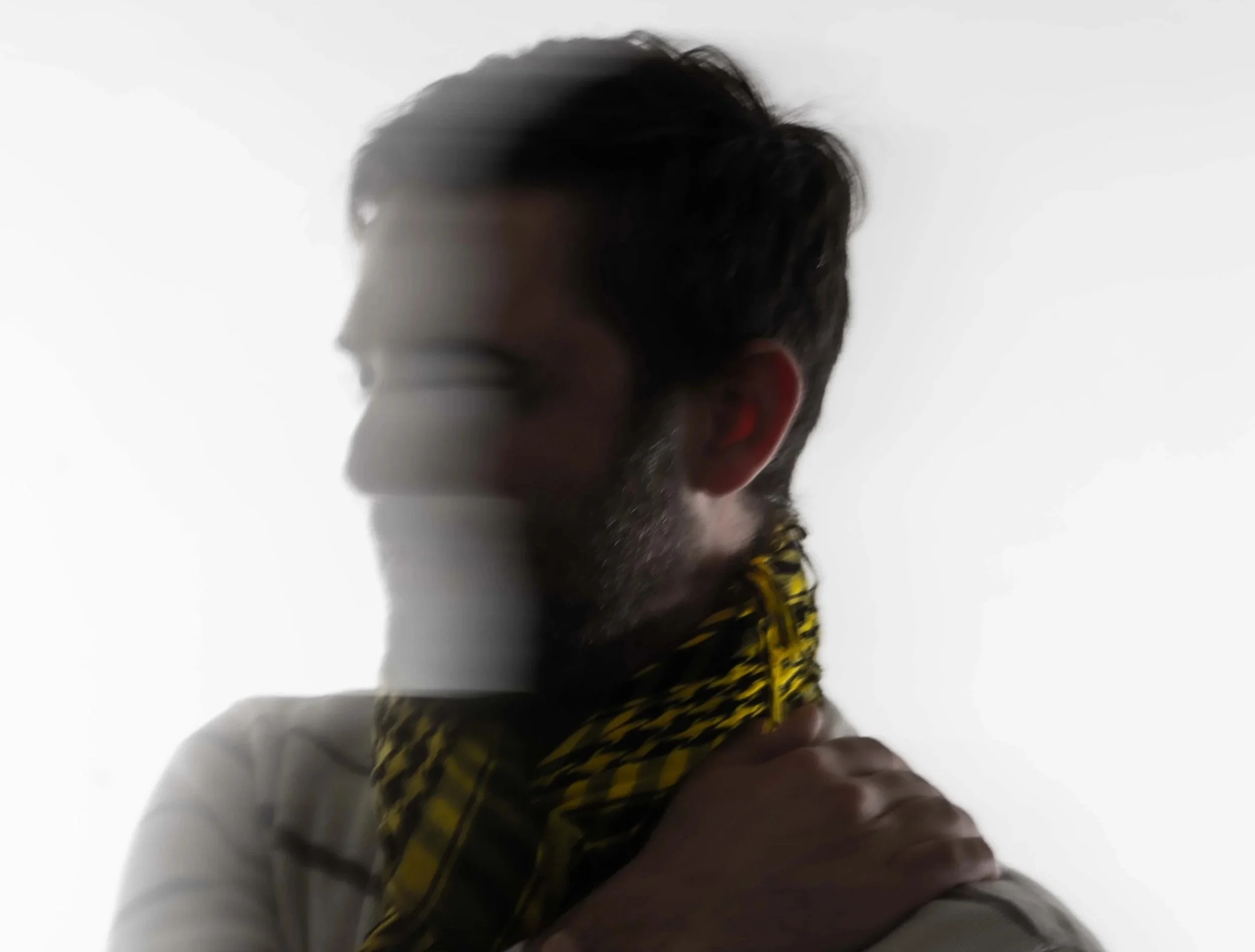
Yazan grew up in Seattle, where rain feels like a constant presence. Mountains stand watch at the city’s edge, and the shorelines are a mosaic of ocean-weathered rock, tide pools holding pockets of tenacious life. Seattle’s old-growth forests taught him that landscape shapes the way you move through the world.
“I grew up in Seattle and there is a lot that I still hold near and dear because of that place, especially when it comes to the landscape. It truly felt like I was raised in an old-growth forest. The trees, the greenery are constantly encroaching on you.”
Encroaching. Not decorating. Not complimenting the view. Encroaching. As though the land refuses to be reduced to background.
Scouting and volunteer search-and-rescue put him on trails and ridgelines early. He found his footing working in teams and helping injured people out of the forests and mountains. Boots on gravel, hands on wet stone, lungs learning the cold bite of altitude.
“In the outdoors the tangible effort to outcome was very satisfying. Climbing especially was incredibly cerebral but also very embodied.”
In the wilderness he can exist without rehearsing an explanation. Without sanding down his name, translating himself, or being measured by the daunting calculus of school grading systems. He doesn’t have to account for the distance between his name, his language, and his clothes. He can simply move across the landscape as Yazan, not as a question.
“I’m going to do my own thing over here and that can be enough.”
Seattle is where he first learned that land can hold you. That may be why it stays close when he talks about Palestine, where belonging has long been tethered to soil.
“Seattle’s a very special place that kind of engenders a connection with the land in a similar way that it does in Palestine. Not that the geography is very similar, but in the way that the geography inspires.”
Two landscapes, the same pull. The land as something that asks something of you.
—
Home, for Yazan, is a constellation.
His grandparents and great-grandparents fled Jerusalem during the Nakba, and the family rebuilt life from scratch in Amman. Over time, relatives spread across North America—the Bay Area, Chicago, Detroit, Toronto. Amman remained the center people circled back to, the place where family felt densest.
“Home isn’t one place. It’s landscape, people, and memory. And sometimes it’s incomplete.”
Yazan was born in Dubai. When he was young, his family moved to Cincinnati. When he was six, his parents chose Seattle as the place they would stay and raise their children.
Growing up, they saved up to travel to Amman every few years in the summer. Amman became its own category of home: familiar and comforting, yet living in the aching shadow of distance.
“Amman offers a sense of home because of the extended family, but it also feels comfortable while still being clearly not my primary home.”
Their visits were long enough for him to remember the sound of his cousins’ laughter, the way his aunts said his name. Long enough for his body to recognize home, and for his heart to feel the pang when it was time to leave, learning that home was no one-place for him.
Colorado holds another point in that constellation.
“This is my home now. My fiancée, Emma, and I have built a beautiful life here with our friends, community, mountain adventures, and even my workplace.”
But growing up and living in the United States came with a conscious tension that never left him.
“It’s never lost on me that here I am, the descendant of people who have been forcibly displaced, thriving in a land that others have been forcibly displaced from.”
Yazan’s words carry a familiar melancholy. It accompanies him on rocky ascents and sits beside him by campfires, emerging from the shadows to guide his use of words like home and belonging.
And then there is Jerusalem.
When he visits, something in him hardens into certainty, even if he does not live there, even if his Arabic isn’t fluent, even if his passport and his clothes read American.
“I arrive in that city with a kind of entitlement. Like this is my home, too.”
—
During his last visit to Jerusalem in the summer of 2023, Yazan moved through the city as someone both recognizable and not. Jerusalem is stone and slope, stairways and arches, walls that hold heat. Streets narrow into shadow, then open again into a bright glare as limestone carries the sun.
At first, local Palestinians didn’t know what to make of him. His Arabic begins strong, then reveals its gaps.
“My Arabic is broken—I’m by no means fluent. But I’m able to get through the first couple minutes of conversation fluently and then it tapers off.”
His face makes sense to people. His clothing does not. He can feel the question hovering in the space between them. Who are you? Where are you from? Are you one of us? Or are you a tourist?
Asked how it feels to be read as American first, he doesn’t bristle.
“It feels right. It feels totally reflective of who I am. I’m never going to fit in in any sort of a mainstream way.”
You can look like everyone else until the map inside you shows its edges.
But when he tells them his name, something old and practiced in Palestinian community snaps into place. Taxi drivers begin refusing payment. Shopkeepers feed him the way you feed family, adding more food to his plate than he paid for.
“In Jerusalem, people brought me quickly into the fold. We take care of each other.”
One of the most intimate moments of his visit was going to the house his family was forced to leave in 1948. The home is now occupied by an elderly Israeli woman named Hanna who has lived there since 1954.
When he arrived, he lingered on the sidewalk longer than he expected to. Not because he didn’t know where the house was, but because arrival is different from anticipation. He arrived with a hard knot of fear and restraint.
Emma spoke first when Hanna cracked open the front door. Using her white-lady powers for good she told her they were on vacation from the States and knew people who used to live there and wanted to come by and introduce themselves. Hanna was confused at first, helpful in her confusion—asking if they were sure they had the right house, asking when their friends had lived there. The conversation built carefully, pleasantly, until Yazan took a breath and told her the truth: he was the great-grandson of the Palestinian family who had lived there before 1948.
She took a moment. Then gave a big nod. “Ooooh…now I understand.”
Emma quickly added that it was a friendly visit. They introduced themselves. Hanna opened the door wider and apologized that she hadn’t tidied up—she wasn’t expecting company.
“I just zipped myself up and was very kind and deferential the whole time. We were there because I wanted videos and photos to share with my family. I wanted to see everything.”
She showed them around without reservation, answering every question, making no effort to rush them out, yet offering no warmth. No tea, Hanna insisted they remain standing as the conversation stretched. Yazan and Emma spent nearly an hour inside.
Hanna pointed out a detail that makes time physical: above the front door, carved in Arabic numbers, the year 1922—the year his great-grandparents built it.
It was not until much later, with good distance from Jerusalem, that the anger, tears, and the insanity of the experience began to set in.
After visiting the house, he went to the site of his great-grandfather Awad’s grocery store, which now operates as a take-away café cooking food for Shabbat. Two men were behind the counter. He and Emma bought a lemonade. Emma asked how long they’d been there, then what had been in the space before them.
“Oh! This is a historic building!” one of them said proudly. “A shoe cobbler worked out of here for sixty years.”
Emma pressed gently: what about before then? The two men looked at each other, unable to imagine what could possibly have existed before that.
So he told them.
“I’m Palestinian and my great-grandfather ran a grocery store right where you’re standing.”
One man sank his head and walked to the back. The other was flustered, offered them a seat, told them to enjoy their lemonade.
“I love that they can’t un-know that every day when they go into work.”
It is a knowing that holds satisfaction and grief at the same time.
—
When asked what has helped him stay grounded, Yazan returns to something he doesn’t always get space to explain.
“I don’t connect with my Palestinian identity primarily through activism.”
That isn’t a retreat from the struggle. He shows up to protests. He follows the politics, carries the grief, makes the demands. But he has come to understand that showing up fully—sustainably, across a lifetime—requires tending to his Palestinian joy first.
More Palestinians now live in diaspora than in Palestine itself. Many are two, three, generations forcibly removed from the land. His understanding of his Palestinian identity holds politics alongside something older: a conviction that culture must be allowed to live and evolve beyond defending its own existence.
He describes attending a panel hosted at the London Palestine Film Festival with voices from Western Sahara, Kashmir, Kurdish, and Native American communities—similar stateless people. The speakers offered a framework that stayed with him: de-exceptionalize any one people’s suffering, and make room for empathy across communities so humanity can be recognized and tended to within yourself and for others.
“De-exceptionalizing Palestine was liberating. De-exceptionalizing any group’s suffering matters.”
When culture lives only inside protest—only as a response to pain—it can’t grow into everything it already is. Making space to be Palestinian without having to explain or defend it makes space for his Palestinian joy to bloom through storytelling, dance, a connection with the land, and the satisfaction of shared meals.
He doesn’t always reach for Palestine through protest chants or megaphones. He reaches for it through the ancient handshake between human and land—his palms pressed into the ridges of mountain summits, and as a backyard beekeeper in Colorado.
“Anytime I open up my beehive, I feel a connection with the land in an ancient way. Any interaction between the human and non-human world is where I feel most Palestinian.”