
The Forbidden Word
Written by Malek Asfeer based on an interview between Malek Asfeer and Deena Duwaik
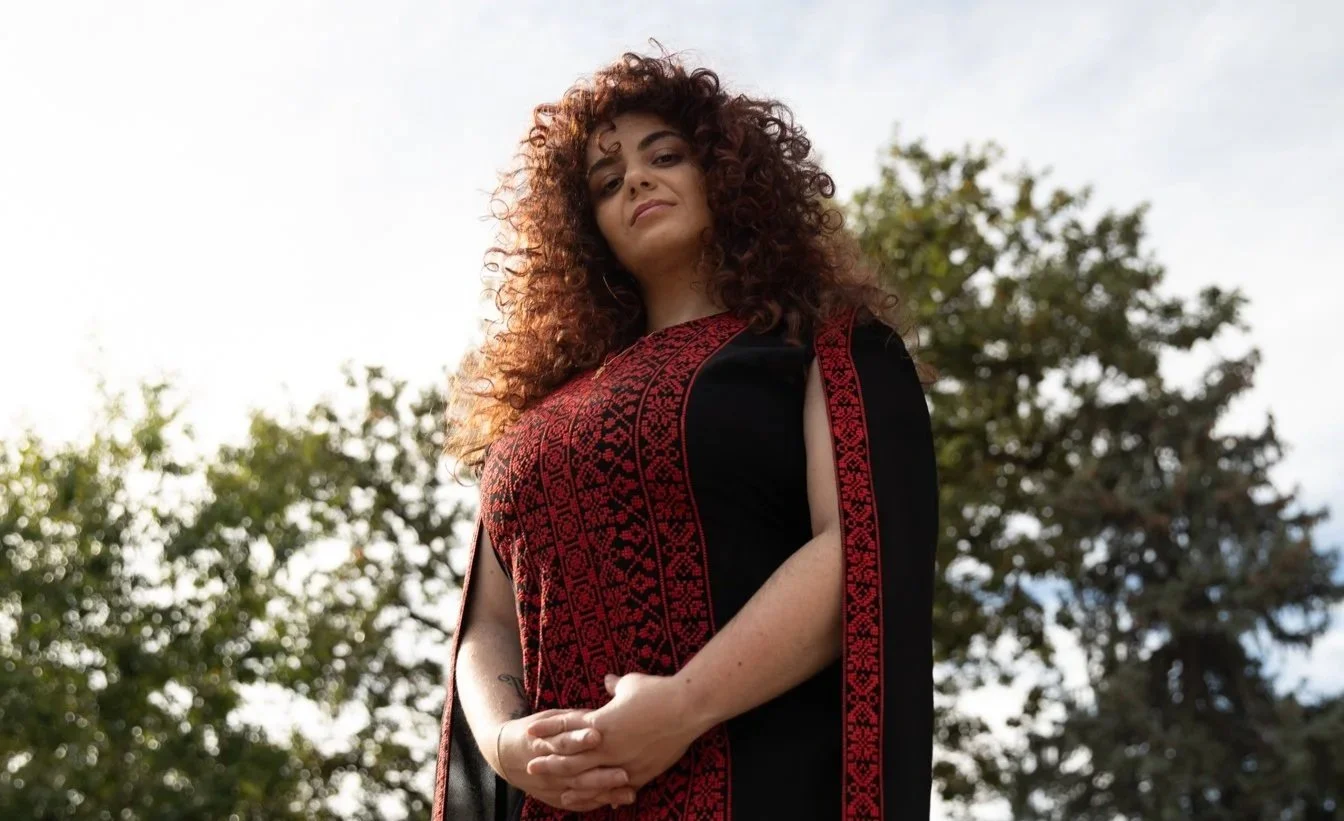
Deena was born in Denver. Raised in Aurora. A daughter of two refugees. A father from al-Khalil. A mother from Nablus. Both driven out from Palestine. Their treacherous journeys converged in Jordan.
They made their way to the United States carrying a grief that did not fit into a suitcase. They arrived with the particular silence of people who have learned that certain words cost more than others. For much of her childhood, Deena understood her identity through the version her family believed would keep her safest.
“I grew up saying I was Egyptian,” she says.
It was not confusion. It was calculation.
Because in America, being Palestinian is not neutral. Being Palestinian draws suspicion. Being Palestinian can cost you. It follows you into job interviews and classrooms and dinner parties where you didn’t expect to have to explain yourself. Her parents understood the stakes. They made a choice rooted in protection — even when protection required quiet.
Protection in immigrant families often looks like disappearance.
It is a particular kind of love. The kind that hides parts of the story so your children might move through the world more freely than you did.
—
Deena came into her identity more fully not in Colorado, but in Palestine. There, something settled. Family members looked at her — half incredulous, half laughing — and in their recognition was a kind of homecoming. The moment was not simple, but it was luminous. Being there felt familiar in a way she had never been taught to name — in the cadence of Arabic around her, in the food, in the landscape, in the way her presence required no explanation. For the first time, her identity was not something to defend or decode. It simply was. And it felt right.
“It was validating,” she says. “I always felt different. I knew I looked different. I was the only Arab, the only Muslim in a lot of spaces.”
But understanding the layers of protection she had been raised within brought both grief and fury. College became an eruption.
“I was angry,” she says plainly. “I was organizing every protest I possibly could. I tried to start Students for Justice in Palestine at CSU. I was denied like a hundred times.”
Her anger had a syllabus. She studied political science and international security. She found herself in classrooms where Palestine appeared only as a footnote, a contested abstraction, a problem without a people.
“It felt like my obligation to make sure people left knowing whatever they were saying was wrong.”
She was, at times, too loud for comfort. Kicked out of classes. Asked to sign agreements guaranteeing that other students would feel safe.
The word lands with a specific irony when she says it.
That her presence — her insistence on being seen — was framed as the liability.
Anger can be shaped into a language. But often it is carried as a responsibility.
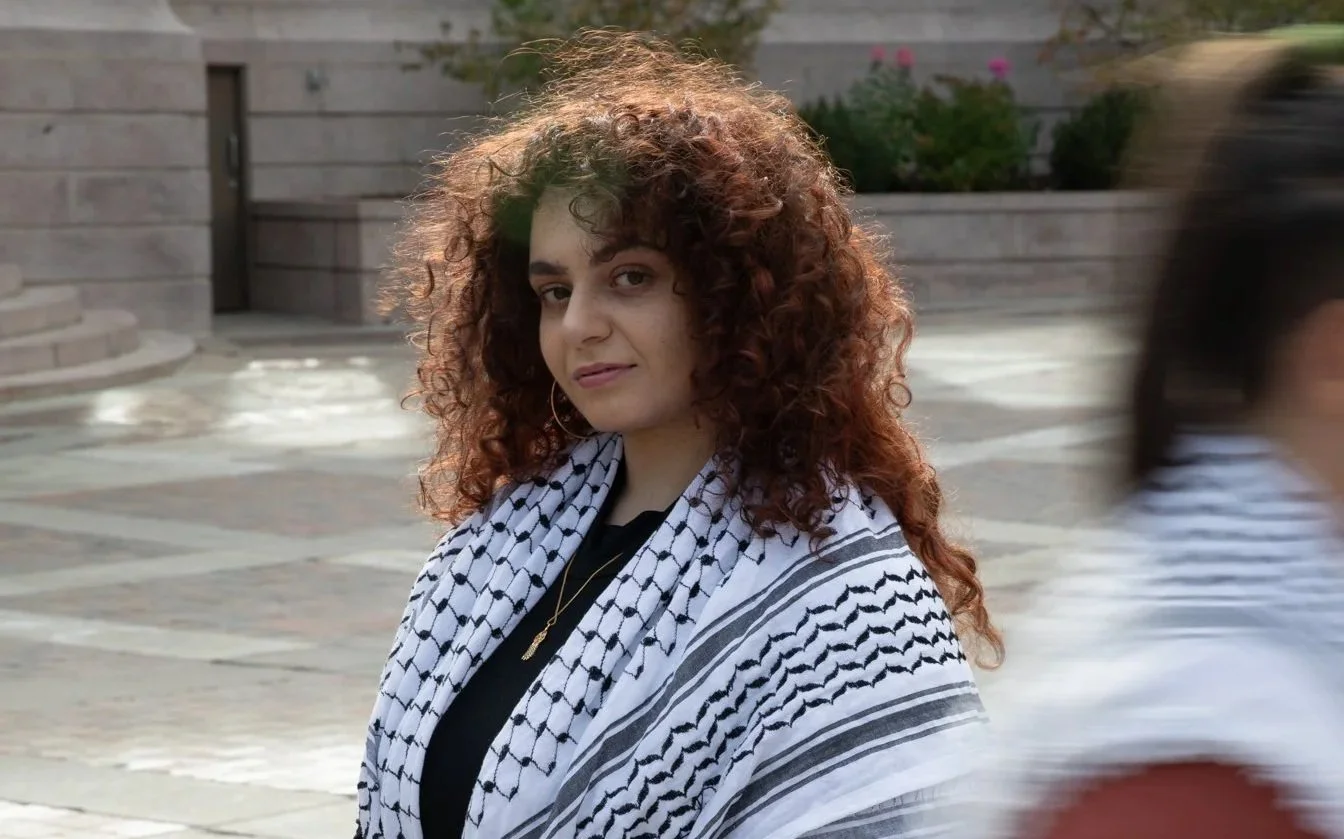
Deena’s healing journey did not begin in America. It began in Morocco.
There, for the first time, she did not have to defend the existence of Palestine. She did not have to argue that her people deserved land, or return, or dignity.
“In Morocco, people were just curious,” she says. “They would kiss your head and say, you’re Palestinian.”
To be recognized without interrogation. To speak of your homeland without someone challenging its right to exist.
For the first time, she could explore her identity beyond resistance. The food. The language. The poetry. The beauty that persists not despite the pain, but inside it.
And yet, even there, the contradiction remained. She was Palestinian. She was also American. The passport in her bag could cross checkpoints her family could not.
When she visited Palestine as a teenager, she rode the buses with her relatives, waited at checkpoints, and saw the separation wall for the first time. She stood on a cliff and looked out at what she describes as a landscape split in two: settler homes bright and ordered, Palestinian neighborhoods pressed into constraint.
“It’s dystopic,” she says. “It’s so othering. So disgusting. And so beautiful.”
Later visits were cut short. A family crisis. A denial of entry. In 2022, she was refused entry altogether. Flagged as radical.
The word is meant to wound. She refuses it.
—
When asked what home means, she pauses. A pause long enough to feel like its own kind of answer.
“I think it’s a dream,” she says.
America is where she lives and works and organizes. Her professional life is rooted in immigrant and refugee communities — shaping policy, building systems, and advocating for access and dignity in spaces that do not always make room for either. She moves through institutions with intention, working to ensure that those who arrive carrying displacement are met not with suspicion, but with structure, support, and belonging. Her academic work remains anchored in Palestine. She occupies rooms of institutional power and uses them deliberately, aware of both their limits and their leverage. And yet, for all the ground she covers here, America does not feel like home. Jordan, where a lot of her family is in addition to Palestine, doesn’t quite fit either.
“In my mind, it’s Palestine,” she says. “Being able to walk the streets of Nablus. To see family I only know through Facebook or WhatsApp. That’s home.”
A home she has been denied. A home that exists somewhere between memory and aspiration, suspended in a space that has no name in English — only in the mouths of people who have learned to carry geography inside them.
—
Visibility, Deena says, is not the same as being seen.
“I feel seen in a very external way. People compliment my hair. They say I look exotic.” She says the word the way you’d say “wrong answer.” Exotic is a kind of noticing that never moves past the surface. It registers difference without seeking understanding. It turns identity into aesthetic — something to admire, not engage.
She can pass in many spaces. Her Americanness is legible. Her résumé is legible. Her smile is legible. And if she does not speak her truth, people remain comfortable inside the shallow version they have constructed.
“There’s always an invisibility until I make it visible.”
Sometimes she chooses safety. Sometimes she names herself fully — Palestinian — and watches the reaction arrive in one of three familiar forms. I’m so sorry. Or: That’s so fascinating. Or, most bluntly: That doesn’t exist.
Each response carries its own erasure. Pity flattens. Curiosity distances. Denial attempts disappearance.
None of them land anywhere near the truth.
“I’m not a victim and I’m not an enemy. I’m an ally and an advocate.”
It is a sentence that should not need to be spoken. That it does is its own indictment. In UNSEEN, this is the axis the exhibit refuses — the binary that compresses Palestinians into either sorrow or threat. The photographs and testimonies insist on something far more dangerous and far more ordinary: the full human being.
—
When asked what she feels most connected to in her culture, she answers with a word that resists translation.
Sumud.
Steadfastness — though the English word is thinner than the Arabic. It does not carry the density of staying. Of remaining rooted when the world rearranges itself around your erasure. Of insisting on existence without spectacle.
“I’m not palatable,” she says. “And I’ve learned to embrace that.”
Her cats are named after Palestinian poets. Her tattoos are in Arabic. Her body is both archive and declaration. Sumud is not simply resistance — it is continuation. It is choosing to remain whole in a system that rewards fragmentation. It is raising children who will know where Palestine is on a map. It is teaching Arabic before English. It is showing up in the streets of Denver every weekend, if that’s what it takes.
It is surviving the year after October 7th.
“I cried probably every day for a year,” she says. “People would tell me, just don’t watch. But it’s our obligation to witness.”
Witnessing is not passive. It is costly.
She faced professional consequences for speaking out. The cost was real, and so were the stakes. Refused to soften the word genocide, even when it might have made things easier. Lost friends. Stepped away from boards that asked her to make herself smaller, quieter, more convenient.
“It realigned my values,” she says. “I’m not willing to sacrifice part of my soul.”
Sumud, then, is not hardness. It is clarity. It is the decision to remain — ethically, culturally, spiritually — even when remaining comes at a price.
—
When asked what belonging means now, she stops herself once, revises, begins again.
“I don’t feel like I belong,” she says first.
Then: “Actually —”
Belonging, she decides, is not about geography. It is about safety. It is being able to say the word Palestine without bracing for impact. It is being able to not show up fully one day because a genocide is unfolding — because grief is not always compatible with professional presence — and having the people around you understand without requiring an explanation.
“It means I can be authentic and unapologetic,” she says. “That I can take a breath and feel safe.”
She is still looking for that place. She may be looking for a while.
For Deena, as for so many, winning does not look like conquest. It looks like continuation.
The stories told. The language taught. The names spoken aloud.
In a system where even immigration databases erase the word Palestine, to say it — and to mean it — is an act of endurance.
And endurance, in the long arc of history, has its own kind of victory.