
The Witness
Written by Malek Asfeer based on an interview between Malek Asfeer and Abdulla Elagha
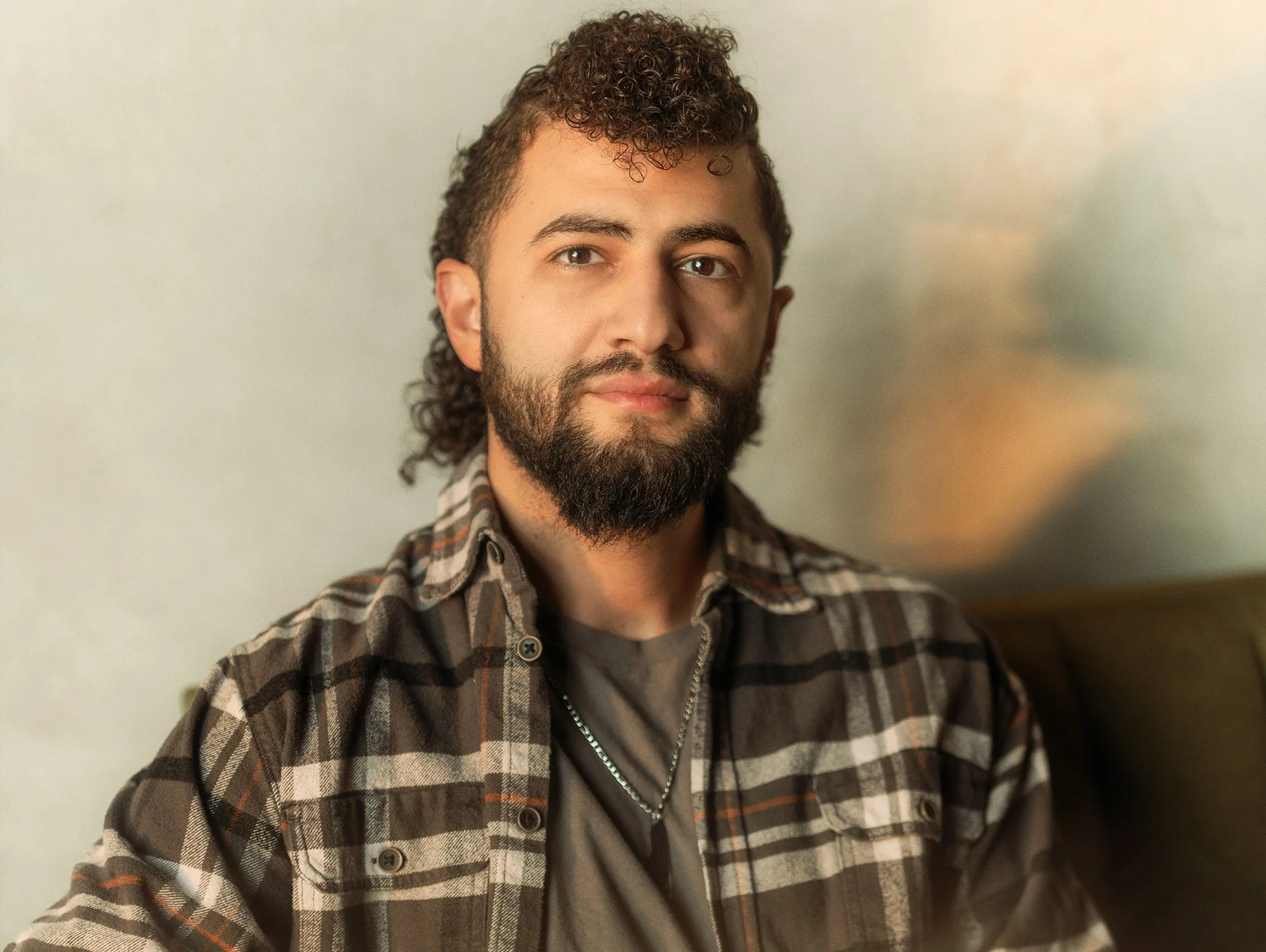
From a distance, war is numbers.
It is a crawl at the bottom of a screen. A map shaded in red. A statistic read in a voice trained not to tremble. Distance flattens suffering. It converts lineage into casualty count. It makes catastrophe digestible.
But distance collapses quickly when the names are yours.
When the dead carry your blood. When the rubble is what once held your grandmother’s laughter. When history is no longer a subject debated in panels, but something that lives in your chest and tightens without warning.
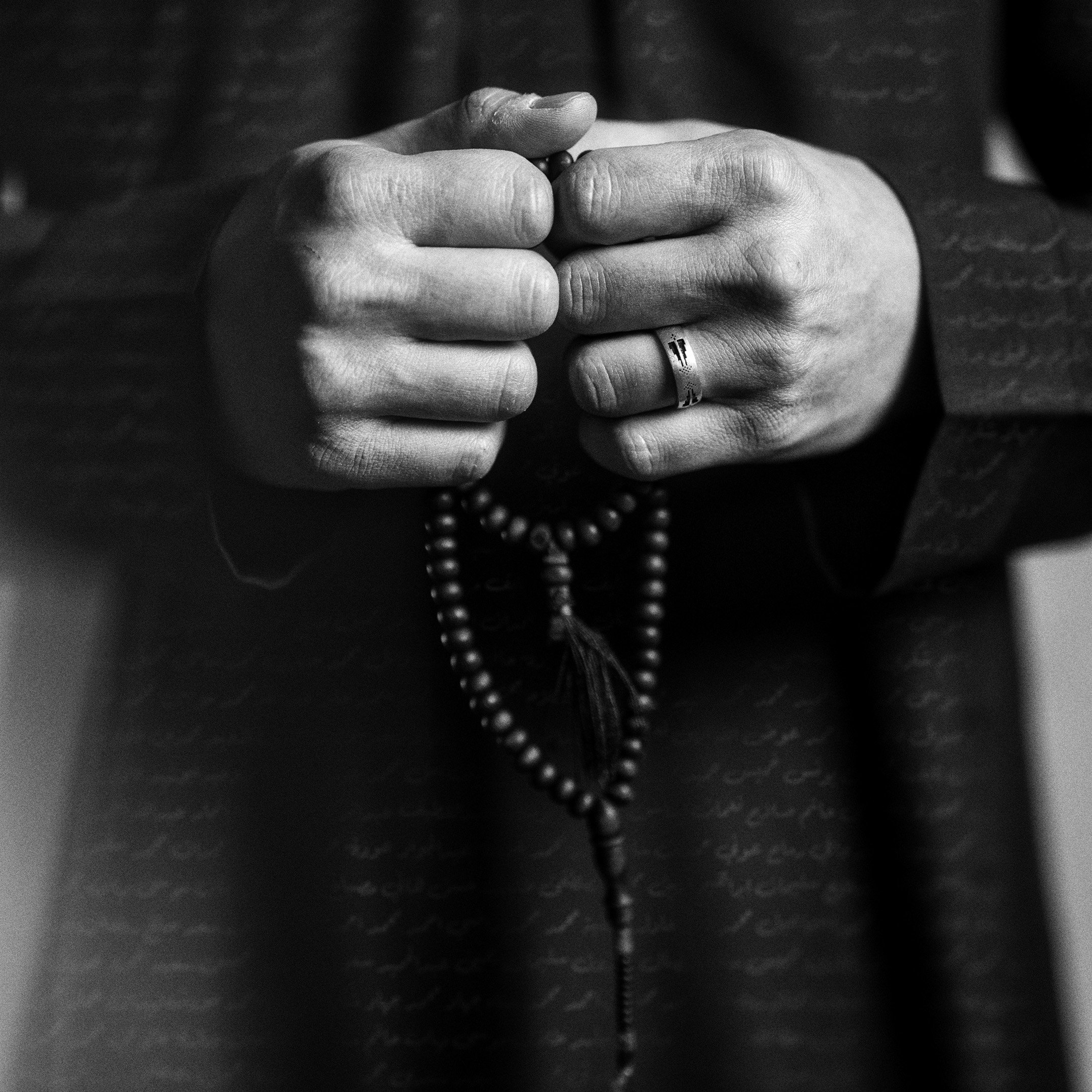
On October 10, Abdulla opened his phone and met the end of a family.
It arrived without ceremony. No knock at the door. No elder clearing his throat before delivering the unbearable. Just a post on the family Facebook page. Seven relatives killed in an airstrike. Their faces arranged neatly beneath a static sentence.
Grandparents. Parents. Children.
The kind of announcement that should fracture the air. Instead, it sat between birthday wishes and advertisements, obedient to the logic of the algorithm.
He stared at their faces and felt time betray its own measure. A second stretched beyond breath, beyond reason, until it felt like an eternity.
There is a cruelty in photographs. They hold a future that no longer exists. Their eyes assume tomorrow. Their posture assumes continuation. You look at them, and you know that somewhere in the frame of that image, is a room that has since been reduced to dust.
“These are relatives I will never be able to connect with, never laugh with, never share a cup of tea with in the Diwan [living room].”
The only survivor of that family was a young boy. He lived through the bombing, only to slowly suffocate beneath the weight of his injuries in the hospital.
“A shaheed,”he continued.
In the Arab tongue, the translation of Shaheed, as martyr is too neat for the weight it carries.
The word begins in witnessing.
Shaheed comes from a root that means to see, to testify, to stand present before a truth and not look away. It is not born in the battlefield. It is born in the act of seeing. In the act of saying, I was here. I saw. I affirm what happened.
Shaheed holds grief free of apology. It arrives as is. It refuses the pressure to make the loss smaller, quieter, or easier to accept. It makes it known that a life was taken within a field of power, that the taking itself reveals something about the architecture of the world. The body becomes evidence. The absence becomes an argument. To call someone shaheed is to refuse the language of accident. It is to place their death inside a moral frame and say that history moved here, through this flesh, and we are responsible for what that means.
“A branch of my family tree just clipped,” Abdulla said.
Clipped. Not erased. Not obliterated. Clipped. As though history were a living thing. As though violence were a pruning.
His family has lived in Gaza for nearly 450 years. They keep record. Names written down. Lines drawn backward through centuries to an ancestor who chose Gaza deliberately. He wanted to be near Jerusalem, he wanted to be near the water.
From that decision grew generations. Weddings held in courtyards. Arguments at dinner tables. Children racing through alleys. The quiet work of building a life in one place long enough that the soil begins to know you.
Four and a half centuries.
And then a truck.
His father was a child when Israeli forces entered Khan Younis and ordered all the men who were of age onto military vehicles as they began their campaign of building settlements in Gaza. If anyone was found hiding, they would be killed. His grandfather climbed onto that truck and was driven through the desert until he arrived in Libya.
Exile is not announced as destiny. It presents itself as interruption. As seemingly temporary misfortune. It whispers that return is imminent.
But exile has a way of settling into blood.
Abdulla was born in Libya because of that truck. His parents tried to return to Gaza after he was born. They lasted about a year. The occupation made permanence impossible. They left again, this time to Chicago.
He grew up in the United States carrying a homeland he did not fully remember but deeply knew. Carried in the flow of blood. In the song of heart beats. Painted in the walls of the soul. Gaza was not myth in his house. It was a detailed reality. It had streets and neighbors and graves. His grandparents spoke of it not as ideology but as lived fact.
Pride was not commanded. It formed in the listening.
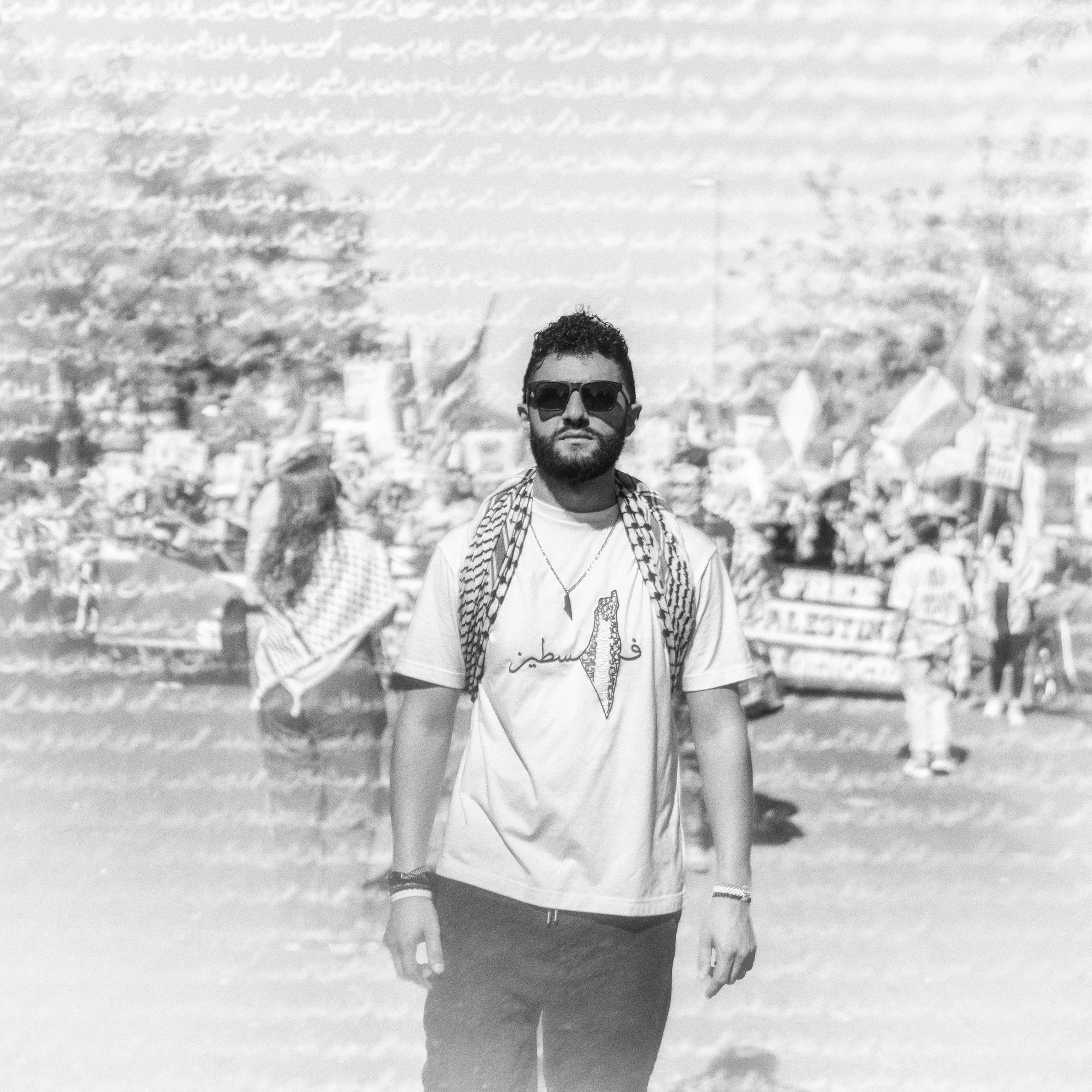
Then September 11 happened.
“People say, ‘I wish we could go back to how unified we were as a country after 9/11.’ I never felt any of that unity. I’ve never felt more separated… more isolated...”
Abdulla remembers it not as unity, but as the sprouting of fear. His Islamic school received bomb threats. Windows were shattered. Shots were fired at the building. His mother, wearing hijab, was told to go back to where she came from.
The cruelty of that sentence rests in its impossibility.
No speech was required to teach Abdulla what that meant. He learned that names could be adjusted for safety. That identity could be negotiated in certain rooms. That there were parts of himself that needed to be trimmed, remolded, for the sake of survival.
He learned to read posture. To measure tone. To calculate risk.
He also learned that dignity could survive even in that narrowing.
Years later, when October 7 unfolded, the world began speaking the word Palestine with urgency. Abdulla watched the footage with dread already rising in him. He knew retaliation would come. History had trained him to know.
When he saw the post announcing his relatives’ deaths, history stopped being instruction and became wound.
He had agreed to speak at a protest in Denver that week. He considered not going. Considered allowing himself the luxury of breaking in private. Instead, he stood before a crowd with grief lodged somewhere beneath his sternum.
He does not remember what he said. He remembers the rage. Presence is a luxury when the wound cuts past flesh, past bone, and settles somewhere you cannot bandage.
Not rhetorical anger. Not the disciplined cadence of an activist. A blinding current. When counter-protesters heckled him afterward, he felt himself move before thought could intervene. Years of restraint dissolved into something elemental.
Grief is not patient.
He was pulled back by hands that understood what he was carrying. Hands familiar with tending to his pain. His wife, Hana.
The notifications continued.
Another family.
Another cousin.
Another child.
The repetition of catastrophe.
He would scroll from sports highlights to images of homes collapsed over people he knew. Then an advertisement. Then another photograph of rubble.
Grief arrived without translation.
No word in any language could hold it. No sentence could contain it. No sound could return what had been taken. No words.
“We are not built for this,” he said.
Historically, when entire lineages were destroyed, the survivors were destroyed alongside them. There was no requirement to attend meetings the next morning. No expectation that you would smile at a colleague while your relatives were being buried.
He had to do both.
He describes those weeks as among the darkest of his life. He wanted to disappear. To retreat into a room and allow the weight to settle without performance. But he felt he did not have that right.
He has running water. Electricity… The probability of tomorrow.
His relatives; Do not.
So he kept speaking.
Reporters called. They asked how many relatives had been killed. They asked how he was coping. They wanted grief in manageable portions. Numbers that could fit inside a segment. Sorrow that would not indict the architecture that produced it.
They did not ask about the 450 years.
They did not ask about the ancestor who chose Gaza for the water. They did not ask about the smell of the sea. The truck in Khan Younis. He began to see the boundaries of acceptable suffering.
It must be visible but not accusatory. Emotional but not historical. Tragic but not political.
He refused that containment.
There is a tendency to understand Abdulla only through what he has lost. But loss is not the sum of him.
He is deliberate. The kind of man who prepares before he speaks. When he gives his Palestine presentation, he does not rely on memorization of facts alone. He studies. Cross-checks. Anticipates the arguments that will be thrown at him before they arrive. He knows that as a Palestinian, his words will be scrutinized. So he does his homework. Not because he doubts his story, but because he reveres it.
When a woman interrupted his presentation and told him he was wrong about his own story, his first instinct was not anger.
His first instinct was, Did I make a mistake?
Before indignation, there was accountability. Before ego, there was integrity. He did not assume moral superiority. He assumed responsibility. It was only when the challenge dissolved into accusation that he recognized what was happening.
This is who he is.
Measured before reactive. Thoughtful before loud.
And at home. He is a husband. A man who can laugh with friends even on days when the news refuses mercy. A man who carries both rage and tenderness in the same body and does not allow one to cancel the other.
He will educate. He will answer questions. He will shoulder the exhaustion if it means one person begins to see Palestinians not as headlines but as people. People with story, with lineage, with philosophy, with a sense of the sacred that stretches backward through centuries.
“I didn’t want to be reduced to this caricature of a sad Palestinian man.”
He speaks of complicity without flinching. He lives in the United States. Pays taxes. Benefits from a system that funds the destruction of his home. That knowledge sits in him like a stone.
“The least I can do,” he says, “is bear witness.”
To see when it would be easier not to. To remember when forgetting would be more comfortable.
Belonging, is sitting in a room with people who understand without explanation. It is being able to grieve and still reach for lightness and humor. To hold sorrow but not let it swallow joy. There is discipline in that. There is courage in that.
Because to remain soft in a world that demands your hardening is its own form of resistance.
“I don’t belong despite being Palestinian,” he says. “I belong because I’m Palestinian.”
There is defiance in that sentence. There is grace in that sentence. There’s strength.
An entire industry has worked for decades to erase Palestinians. Funded by wealth. Armed with policy. Shielded by narrative. Yet still, Palestinians remain. In Gaza. In Chicago. In Denver. In exile and in homeland.
A branch was clipped.
But a tree that has stood for centuries does not mistake one cut for its ending. Its roots are older than the blade. Older than the hand that holds it. They press into the earth, into layers of soil that remember empires rising and falling.
Violence can shear a limb. It cannot uproot what has learned how to survive drought, exile, and fire.
And in Abdulla, those names do not fade when the screen refreshes. They do not shrink into statistics. They do not dissolve into talking points.
They live.
As memory.
As duty.
As living proof that history is not past tense.
And witness, once taken into the body, becomes a responsibility.