
The Pillar
Written by Joie Ha based on an interview between Malek Asfeer and Madalia Maaliki
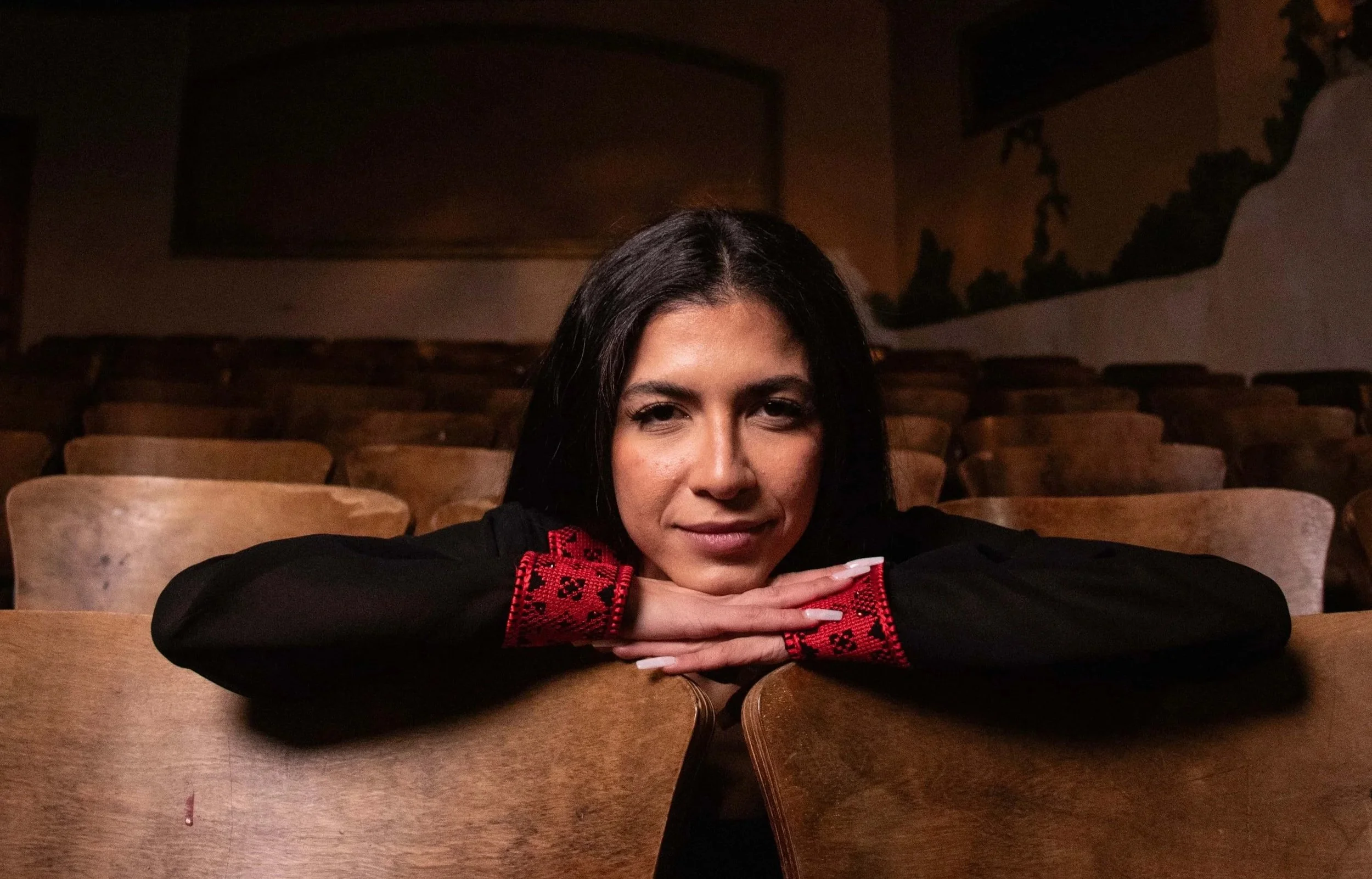
Madalia Maaliki is immovable. Rooted like an olive tree. Regardless of the challenge, her conviction remains steadfast. A criminal defense lawyer, she chose to leave her job to return to Palestine to provide support on the ground. She was denied at the border and now resides in Lebanon, prepared for an opportunity to return and rebuild.
—
Half-Lebanese and half-Palestinian, Madalia wryly jokes she has, “all the war zones covered.” The humor is a coping mechanism. Her childhood was threaded by stories of her family in Lebanon and Palestine. Dinner table conversations revolved around relatives surviving genocide and apartheid. “It really is just ingrained in us, the trauma of it and the way that we have made it almost normalized,” Madalia shares.
The deep echo of violence from across the ocean can immutably change the shape of a growing soul. Carrying the weight of memories- even those not your own- can create fear of sharing who you are and where you come from. But even so, those same memories form a kiln, the pressure and heat building a pride that cannot be ignored.
When she was younger, Madalia would assess the room before disclosing she was Palestinian. Afraid of the judgement and questions it would bring up, it was sometimes easier to just omit that part of her identity. But Madalia always knew her roots. Her dad often said, “you're Arab first and then American second.” Her heritage and lineage were always a part of her- never truly hidden- but a seed germinating in the earth until its ready to greet the sun.
Madalia describes the journey of becoming more of herself as a return- a reclaiming of what was always there: “You just become very drawn to it because you miss it from your life and you're proud of it.” As she grew up, Madalia settled into her Palestinian identity with an undeniable confidence. No longer a question, but an irrefutable statement.
—
Being in exile means being split between two worlds, two visions. In one eye, fluorescent office lights and the glow of computer monitors, and in the other, bright white phosphorus trailing across the sky and blazing, life-consuming fires. Madalia reflects, “diaspora is knowing these two realities can coexist.”
As the violence escalated in Gaza, Madalia continued to work while being burdened by the knowledge of the genocide. It was a surreal existence of extremes. The regular day-job, the commute to work, the dinner plans with co-workers. And the constant organizing, the endless hours at night in the company of a flickering phone screen, the heart yearning to do more. Her fingers must have scrolled the distance of hundreds of miles, but she felt no closer to home.
There was a palpable guilt and hopelessness from bearing witness. “I was struggling, just feeling completely useless,” Madalia shares, “I can post about Falasteen all day. I can boycott. I can fundraise. I can do whatever in my mind I've been told is going to make an impact. I just felt that it was inadequate. I would go to work and try to go about my life normally.”
Eventually, Madalia realized,
“I just knew I needed to do something different. And the only thing I could think of is just physically being [in Palestine].”
—
Resolved, Madalia prepared to move. As a lawyer, Madalia was more than prepared and ensured all her papers were in order. At the border- like countless other Palestinians- she was denied entry. She had flown halfway around the world, could finally share the same air that her ancestors breathed, walk the same land, yet could go no further.
Herded like cattle, in line for hours, Madalia describes the experience as a “place where it’s completely lawless.” She watched others being waved through with ease, even if they did not have any documentation. There was a ‘right’ and ‘wrong’ nationality, and Madalia was the latter. An apartheid state in all senses of the word, it was after endless waiting that Madalia was eventually pulled aside. She was interrogated by five officers. Hour after hour, she was subjected to exceedingly bizarre lines of questioning. They looked through her phone and all her belongings. It was all for show. Madalia’s fate was cemented the moment she arrived. When they issued the official rejection, they continued to hold Madalia’s passport until the very last bus was about to leave. This was not just bureaucracy: it was a spectacle, a humiliation ritual. Just an elaborate display of power and how far they could go. A reminder to Palestinians that it didn’t matter if their papers were properly stamped, stapled and organized neatly in folders, filled with legal precision. You will always be treated as lesser than.
Madalia recalls how the experience felt in her body, “I was shaking…my chest was warm.”
Anger is a wave of flame that overflows. A shiver in the body. A streak of tears. It boils underneath the skin, turbulent and seeking release.
But it solidifies to purpose. Despite it all, Madalia is now in Lebanon. She continues to find ways to help. And eventually- one day- she will return home.
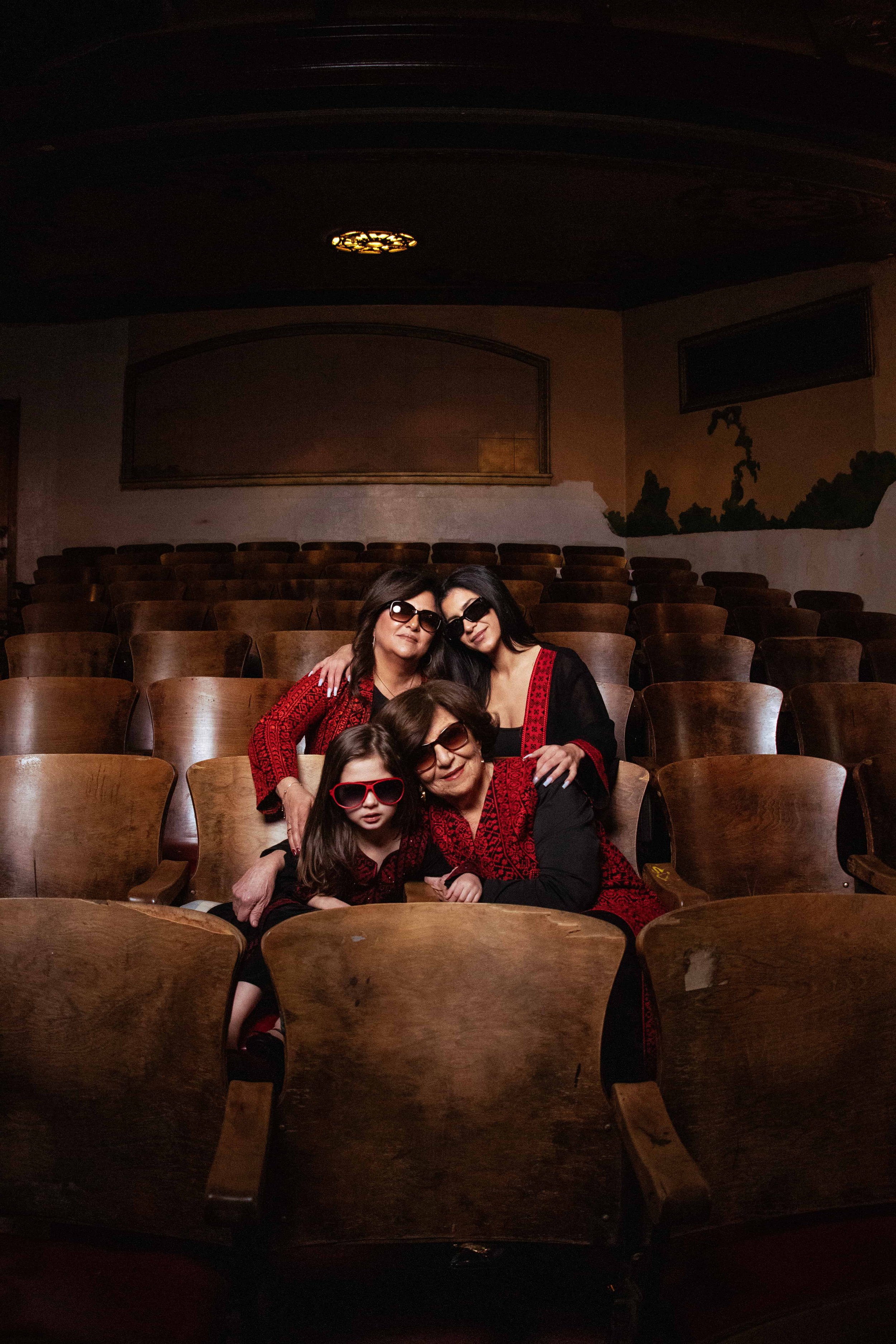
When asked ‘What is Palestine to you?’ Madalia answers, “you know, everybody says it's the litmus test, but for me, it's my family.”
Home is a people, home is a place. It is the art, it is the music. It is stubborn fingers clinging to heritage that others try to pry from you.
It is the food. Madalia laughs, it's the “feeding you and overfeeding you and making sure and asking you 10 times if you want more food.” A generosity that feels full in body and soul.
It is the language, “the Arabic language is so beautiful…it just speaks to this feeling of belonging.” The lilts and tones in the Arabic language communicate infinite depth. Even in the simple phrases, whole worlds are constructed. When asked for a favor, someone may reply “min a'yoonie” which translates to "from my eyes." It's the short version of "I will gladly do this task with the sight of this eye –pointing to one eye– and if I lose the sight in this eye while attempting the task, I will gladly continue with my other eye until it's done.”
To Madalia, the feeling of belonging is not just one answer. It is in everything. When a people are displaced, every assertion of their existence is a piece of home. For Madalia,
“it's this long-standing resilience and adherence to the identity, whatever form that takes.”
—
In reflection, Madalia shares how, despite having the requisite skills to help, the legal community fell short in Colorado. In her field and beyond, too many people remained on the sidelines. Few offered tangible support, some shared empty platitudes, and too many relegated Palestine to something ‘over there’ and refused to open their eyes. She laments, “as much progress as we make, in many ways we remain invisible.”
Madalia’s portraits in the UNSEEN exhibition feature her and her family inside the iconic Aztlan Theatre. It is an undeniable assertion of their existence. It questions- what does it mean to be seen? Do people only see Palestinians through a voyeur's view, only when they are the ideal victim? What is the gaze between Palestinians in the diaspora and in the homeland? And how can we as an audience move from witnessing to action- even if it is just a little bit at a time?
The oxymoron of being a Palestinian in diaspora means being uprooted and grounded at the same time. Madalia’s body has traveled across oceans and borders, yet her spirit is immovable.