
What Holds Us Together
Written by Joie Ha based on an interview between Malek Asfeer and Natalie Baddour
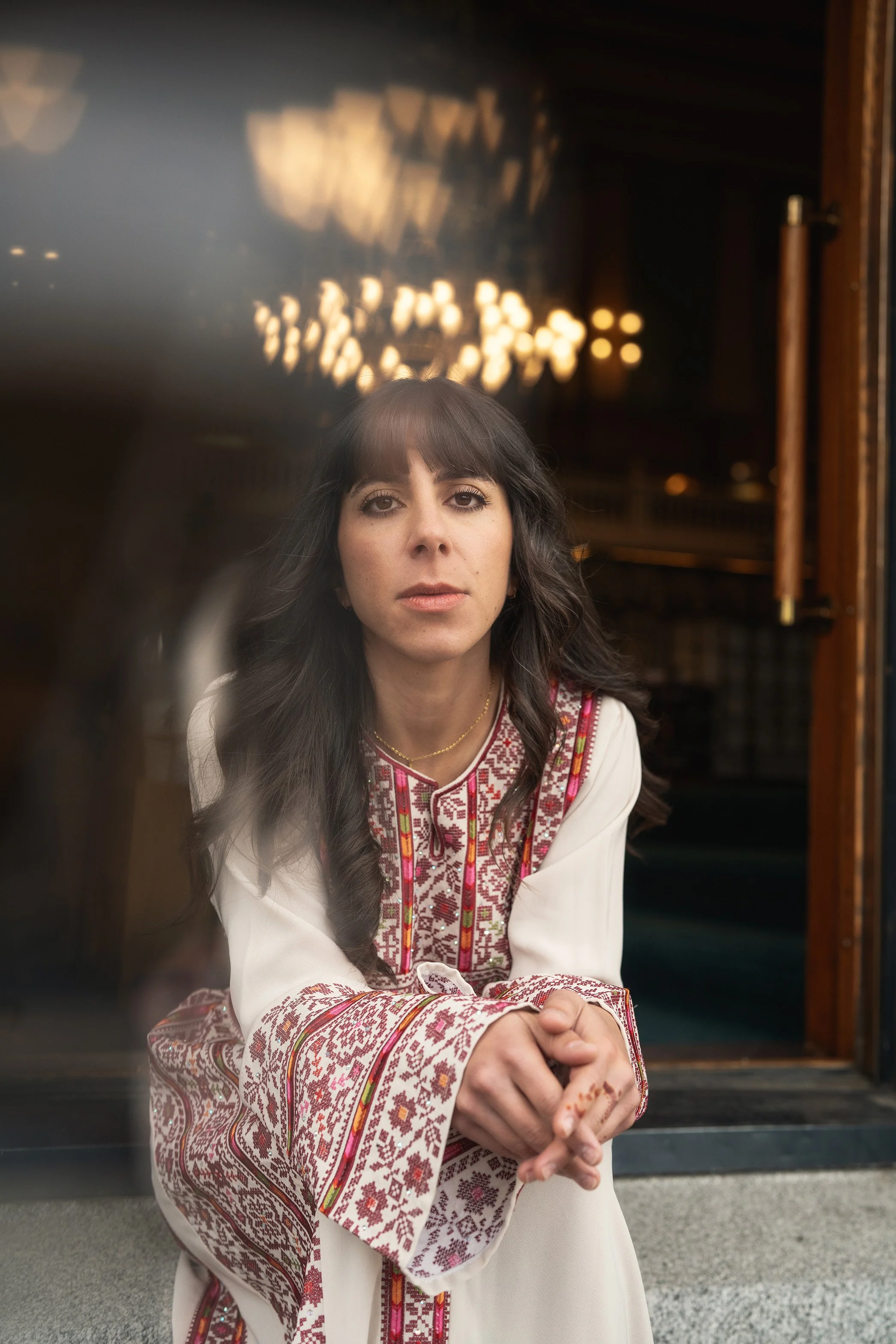
Working in the carceral system, Natalie is distinctly aware of the liminal space that prisoners exist in. The overhead fluorescent lighting that imitates a perpetual day that never ends, the labyrinth of lengthy hallways and locked doors punctuated by the jarring beeps that indicate successful access. The way that shoes sound on the linoleum flooring- the gait of the guards crisp and sharp from their booted heels, the near-whisper swish of prison standard slippers. Time is marked only by meals and the officers that regularly tap each door for count. It’s a place that is both sterile and teeming with life, heavy with the breath and sweat of those that society prefers to lock away. Hidden, pushed to the side, and left in small 6x8 rooms to be forgotten. A people severed and completely disconnected from the world.
Natalie is a licensed professional counselor for incarcerated youth. What she sees are not delinquents to be punished, but souls who have been physically and metaphorically put into a box. She sees the strength that it takes to continue dreaming of a better future despite being told you don’t have one. She sees youth ready to be unbridled, resisting the definitions others use to rein them in.
Freedom can be a state of being. But no matter how much your spirit reaches beyond the confines of your edges, the world is cold and calculating, quick to yield power like a holy mandate, acting with impudence in damning others. Like Palestinians, sometimes you are just born guilty.
—
Natalie’s ancestral inheritance anchors her in Bethlehem, the birthplace of Jesus Christ, and her family’s religious foundation.
Her father, Bandaly, left Palestine in the late 70s as an immigrant, and later pursued his master’s in Mathematics in the United States. On a trip back to his homeland, he was asked to bring a nice suit with him. When Bandaly asked his father why, he replied, “I don't know, maybe there'll be an opportunity for you.”
He saw her in church. Arlyn. Proud and measured, sharing her testimony in front of the congregation. Radiant in how she wore her faith, her presence made an irrevocable etching on his soul. Right afterwards, he requested to meet with her parents.
He wrote to her. She had received many love letters before, but these ones were weighted a bit differently, imbued with what some might call fate. Before, her response to the litany of confessions was often “No, this isn't the person. This is a waste of my time.”
But for him, her heart opened.
She fasted. She prayed. She settled into divine stillness. She communed with God and asked for guidance in her decision.
Three weeks later, they married. They moved to the United States and 37 years later, Natalie’s dad wore that same suit to her wedding.
Like an unbroken chain, the love that nurtures Natalie’s heritage spans across generations and borders. Forged through unshakable faith, it binds her family together through all the trials they face.
—
Natalie spent her childhood years in California, and then moved to Arizona when she was 6. Through it all, her parents were deeply embedded in the community and church, giving her some measure of comfort in her identity.
But still, there were little things. An unfriendly glance, snide remarks whispered under the breath, and jokes that were more insult than jest. So Natalie found herself assimilating in little ways to fit in. Like folding errant edges of a note for offering, sending small parts of herself away; like a penitent bent in prayer asking for salvation, though no sin was committed.
Her parents were also familiar with the varied ways that racism intruded in one’s life- with cold, calculating indifference, or pointed fury. Despite her father’s education and her mother’s determination, they were often treated as foreign- even dangerous. How people reacted to you depended not on your qualifications, but on the color of your skin or the lilt of your accent.
Nevertheless, her dad continued to move forward with an unwavering desire to live fully. “There was still a lot of humanity in him,” Natalie reflects, “he never let [these moments] be something that altered his joy or his experience of life.” Her mother was the embodiment of strength. A pillar of determination that never let anything- or anyone- dampen her drive to succeed.
It is through them that Natalie’s steadfastness is distilled. Through not only their resilience, but in the way they confront challenges head-on. Faces turned towards the waves that threaten to wear them down. Anchored in the ocean bed, with a laugh and a stare, daring the world to try them again.
—
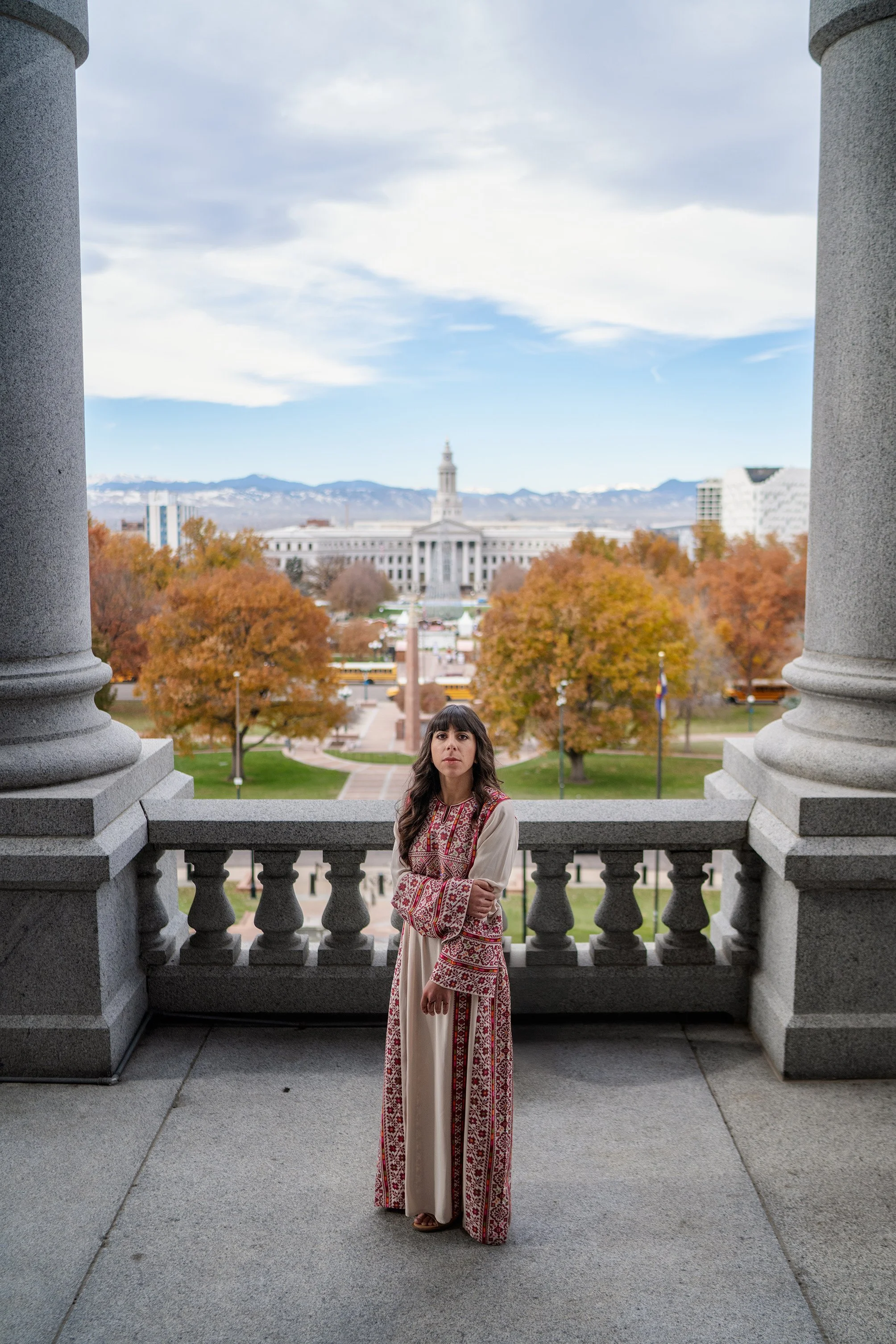
Arabic script sprawls along the line of Natalie’s bicep. In the handwriting of he grandmother a tattoo reads, “from that time on.”
After college, Natalie moved to Colorado to get her master’s degree. This led to her career as an entrepreneur- founding several businesses and nonprofits- and ultimately to her life’s work today. This decision delineated her life into a clear before and after.
Natalie’s lineage is not unfamiliar with jails. Many loved ones have been detained as political prisoners. It was a natural connection she had when she started working with incarcerated youth. She describes this re-encounter with the carceral system as a moment when the “veil dropped.” When she was finally able to see clearly the way the world was. She reflects that this is the time that radicalized her the most, “realizing that I'm no longer going to live in these forms of assimilation.” From that time on, she understood,
“the community in which the world demonizes the most is the community in which I felt the most safe.”
It was restorative. Her conversations with her young people drew parallels with the way Palestinians were seen. Having already survived so much- from systemic oppression to violence to gangs- they were reduced to the conditions they endured. Oftentimes, punished for the way the system had failed them. Natalie saw the reflection distinctly, “the root of suffering of my Palestinian identity is the same as my young people behind bars.”
It is a journey that parallels her own. A world that insists that certain people are predisposed to suffering, not acknowledging the source of it. One that pushes Palestinians and Black and Brown bodies beyond the edges of our vision. In prisons, behind apartheid walls, in places where their existence registers only in the imaginary so we may only know them through stereotypes. Because when you can’t truly understand a person for their humanity, it is that much easier to see through them.
“The most privileged relationships of my life are those behind bars,” Natalie reflects, “And they've liberated me, and I know that proximity has the power to liberate so many more people.”
The very chains made to hold us down, are also the ones that hold us together. Interlinking our struggles, connecting our freedoms.
Each act of rebellion: a hammer striking steel. Each act of care: water tempering fired metal. Molten folded over and over again, generation after generation, smelted in the furnace of resistance into something unbreakable. One link at a time.
—
When asked what parts of her are visible, Natalie recounts the joy, “I think I carry that well because my family has carried that well.” The world sees her organize, her protests, the way she holds community. They see her defiant laugh.
They see her joy, but not the suffering that upholds it. The resistance, but not the sorrow that shapes it.
“It’s the things that we hold close to the chest,” she says, “it's the pain, it's the anguish, it's the grief, it's the mourning, it's the anger. It's the ancestral lineage of not only holding my own rage, but holding this deep long line of suffering.”
Like amber-colored olive oil, her pain is translucent. It is easily missed from a distance, merely a sepia-tinted lens imitating the fictional desert wasteland that Hollywood loves to put Arabs in. Only when you look closer can you start to discern its edges; the smooth stickiness of sorrow that refuses to wash away, the limitless depths of burning conviction in the shades of orange, and the yearning in the sweet smell of home.
Belonging, for Natalie, is a space that embraces all of this. The contradiction and messiness, the wholeness of emotions. “It is a community that seeks each other’s liberation,” she shares.
It is the people. And the love between, for, and of.
Natalie explains, “I’d like to thank the Palestinian people. The ones back home and the ones here, the martyrs, the family members that I will never get to know…I carry the lineage to believe in what I believe in because of them.”
On Natalie’s other arm, her dad’s handwriting mirrors her grandmother’s. In Arabic “all glory to Christ.” It’s a reminder. Everything that we have, we owe it to those before us.
The messages from her grandmother and dad rest on the inside of each arm, cradling her heart.
—
Home is often thought of in a physical sense. The land, the resources, the buildings. All things that colonizers can steal and rob. But, there are things that remain unconquerable. For Natalie, home is “that soul, that spirit, that being, the thing that people can't strip from you.”
Finding belonging in the liminal space of exile means making a home with intangibility. Ironically, it is this space of in-between that Palestinians have fostered something lasting and permanent.
There is a feeling- beyond the culture, the food, and the dance. It’s the same sensation that Natalie gets when she’s around her young people, demonized behind bars.
“If anyone spends any duration of time with the body of Palestinian people, they will know exactly what that feeling is about.”
It’s transcendent. And while it may not be quite tangible, it lingers like the afterimage on the back of your eyelids. A stubborn fixture in your mind’s eye. Like how the silence after a devout prayer, is not really silence at all, but faith itself opening eternal possibility and grace.